
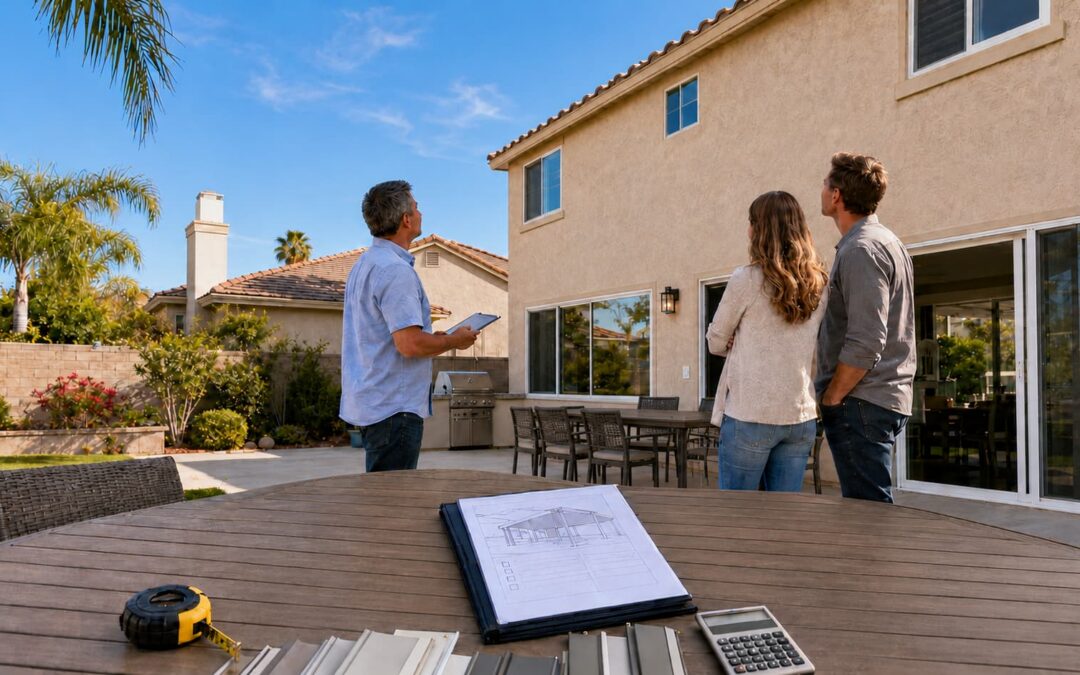
Comparing patio cover quotes sounds simple until the estimates start coming in.
One contractor may quote a solid patio cover. Another may recommend lattice. A third may include lighting, engineering, permits, or HOA drawings, while another leaves those items vague. The dimensions may look similar, but the projects may not be the same at all.
That is why the lowest patio cover quote is not always the best value, and the highest quote is not automatically the best design. Before you compare numbers, it helps to know what questions to ask.
For Orange County homeowners, those questions matter even more because homes, HOAs, city rules, sun exposure, and backyard layouts can change from one neighborhood to the next.
A patio cover in Irvine, Mission Viejo, Huntington Beach, Newport Beach, Anaheim Hills, or Yorba Linda may need a different design approach even if the square footage looks similar on paper.
Start With the Real Goal of the Patio Cover
Before asking which quote is cheapest, ask what problem the patio cover is supposed to solve.
Some homeowners mainly want afternoon shade. Others want rain protection, a cooler patio, a more finished outdoor room, a clean place for fans and lights, or a cover that satisfies an HOA without making the home too dark.
Those goals point toward different products and details. An open lattice patio cover may be the right choice when filtered light and airflow are the priority. A Newport flat panel patio cover may be a better fit when the homeowner wants more complete shade and rain protection. An insulated Maxx Panel patio cover may make sense when heat reduction is a major concern. An Equinox louvered roof system may be worth considering when adjustable light, shade, and ventilation are important.
If two quotes are based on different goals, they are not yet really comparable.
Ask What Product Is Actually Being Quoted
Not every aluminum patio cover quote is quoting the same material, system, finish, or structural package.
Before comparing prices, ask the contractor to identify the exact product being quoted. Is it genuine Alumawood? Maxxwood? Maxx Panel? Equinox? A different aluminum system? Is the roof lattice, flat pan, insulated, or louvered? Are the posts, beams, rafters, gutters, downspouts, trim pieces, and attachment details included?
A vague quote may be easy to read, but it can leave too much room for misunderstanding. A better quote should make clear which system is being installed and which components are included in the price.
Ask Whether the Size Is Based on Use or Just a Rectangle
Many patio cover estimates start with width and projection. That is necessary, but it is not the whole design.
A patio cover should be sized around how the space will actually be used. Where will the outdoor table go? Where does the sun hit hardest? Does the cover need to shade a sliding door, a kitchen window, a barbecue area, poolside seating, or an outdoor sofa? Will the posts interfere with traffic through the backyard?
Two contractors can quote a 12-by-20 patio cover and still produce very different estimates. One may be thinking carefully about furniture, views, doors, drainage, sun angles, and post placement. Another may simply be pricing a rectangle.
Before deciding which quote is better, ask why that size was recommended.
Ask How the Patio Cover Will Attach to the Home
The attachment point can affect the look, comfort, structure, and approval process of the entire project.
Some Orange County homes have clean fascias, making attachment straightforward. Others have low eaves, second-story windows, roof returns, stucco details, tile roof conditions, or elevation changes that require more thought.
Ask each contractor:
- Where will the patio cover attach?
- Will the height feel comfortable under the cover?
- Will the design affect doors, windows, lights, vents, or roof drainage?
- Does the quote include the attachment hardware and finish details?
- Will the design look integrated with the home?
If the attachment is not being discussed, the quote may not be telling the full story.
Ask What Is Included for Posts, Beams, and Footings
Post placement is one of the most important parts of a patio cover design. It affects structure, appearance, furniture layout, views, and daily use.
When comparing quotes, ask how many posts are included, where they will land, and whether the project requires footings. A quote with fewer posts may look cleaner, but it may require different engineering, larger beams, or a different product system. A quote with more posts may be less expensive, but it could make the patio feel crowded or interfere with how the homeowner wants to use the space.
Neither answer is automatically right. The important thing is whether the contractor can explain the tradeoff.
Ask About Permits and HOA Requirements Early
Permits and HOA approval can affect both timeline and design. They should not be treated as an afterthought.
In many Orange County neighborhoods, especially in planned communities, the HOA may want drawings, dimensions, product information, color details, photos, or neighbor awareness forms. The city may have separate requirements for structural review, setbacks, attachment, footings, drainage, and electrical work.
Before comparing quotes, ask:
- Does this project likely need a city permit?
- Does the quote include help with permit documents?
- Will HOA drawings or product information be provided?
- Who is responsible for submittals and follow-up?
- Could approval requirements change the design or price?
A quote that ignores approvals may look attractive at first, but it can create delays or revisions later.
Ask Whether Electrical Features Are Included
Lighting, fans, outlets, heaters, speakers, and switches can make a patio cover much more useful. They can also change the scope of work.
Some quotes include electrical planning. Others leave it out entirely. Some may include only the patio cover structure, while the homeowner must coordinate electrical separately.
If you want lights or a fan, ask where the fixtures will go, how the wiring will be handled, whether the electrical work will require permits, and whether the finished look will be clean. For solid and insulated patio covers, integrated lighting can be a major part of the design. For lattice covers, the approach may be different. For louvered systems, controls and motorized components should be discussed from the beginning.
Electrical features are much easier to plan before the patio cover is built.
Ask How Drainage Will Be Handled
Drainage is not always the first thing homeowners think about when comparing patio cover quotes, but it matters.
A solid, insulated, or louvered patio cover requires a water plan. Ask whether the quote includes gutters, downspouts, drainage direction, and any details needed to move water away from doors, walkways, seating areas, and problem spots in the yard.
This is especially important on homes with tight side yards, existing hardscape, slopes, planters, pools, or drainage issues. A patio cover should make the outdoor space more comfortable, not create a new water problem.
Ask What the Finished Patio Cover Will Look Like From Inside the House
Homeowners often think about how the patio cover will look from the backyard, but the view from inside the home matters too.
In many Orange County homes, the patio cover is visible from the kitchen, family room, dining area, or primary bedroom. If the cover is too low, too dark, too heavy, or poorly aligned with windows and doors, the home’s interior can feel less open.
Ask whether the design preserves natural light where needed. Ask how the color will work with the fascia, stucco, trim, roof, and hardscape. Ask whether the beam size and post layout will feel balanced with the home.
A good patio cover should improve the backyard without making the home feel boxed in.
Ask What Could Change the Final Price
A clear quote should explain what is included and what could change.
Possible price changes may come from engineering, permit requirements, HOA revisions, footings, electrical work, unusual attachment conditions, demolition, concrete issues, access limitations, upgrades, color changes, or changes to size after the first design.
The goal is not to make the project sound complicated. The goal is to avoid surprise. A contractor who explains possible variables up front is usually helping the homeowner make a cleaner decision.
Ask How the Contractor Would Improve the Design
One of the best questions a homeowner can ask is simple: if this were your home, what would you adjust?
That question can reveal whether the contractor is only pricing a request or actually thinking through the project. An experienced patio cover designer may suggest a different projection, a cleaner post layout, a better color choice, an upgraded panel, added lighting, or a smaller cover that fits the home better.
You do not have to accept every suggestion. But you should listen for practical reasoning. The best recommendations usually connect back to comfort, shade, structure, appearance, approval, and how the space will be used.
A Better Quote Comparison Starts With Better Questions
When patio cover quotes are truly comparable, the decision becomes much easier. You can see which product is being quoted, what design choices are included, how approvals will be handled, and whether the finished patio cover will fit the home.
Price still matters. It should. But price only helps when you know what the number actually includes.
If you are planning a patio cover in Orange County, take time to ask the questions before choosing a contractor. A clear conversation early can prevent confusion later and lead to a patio cover that looks right, works well, and feels like it belongs with the home.
Here is a list of questions you should be asking:
- Are you licensed and insured to install patio covers in my area?
- Do you specialize in Alumawood, aluminum, insulated, lattice, or louvered patio covers?
- Can you help with city permits and HOA approval, if required?
- What type of patio cover would work best for my home, sun exposure, and backyard layout?
- Will the patio cover be custom designed for my house, or is it a standard kit?
- What is included in the quote, such as materials, labor, posts, footings, gutters, electrical, permits, and cleanup?
- How long will the project take from estimate to installation?
- Can you show photos of completed patio cover projects similar to mine?
- How do you handle drainage, attachment to the house, post placement, and other design details?
- What warranties are included for the materials and installation?
Factory Direct Patio Covers helps Orange County homeowners compare options for genuine Alumawood, Maxxwood, Maxx Panel, and Equinox patio cover systems. To start planning your project, visit our product page, browse our gallery, review our brochures, or contact us for help with your patio cover quote.